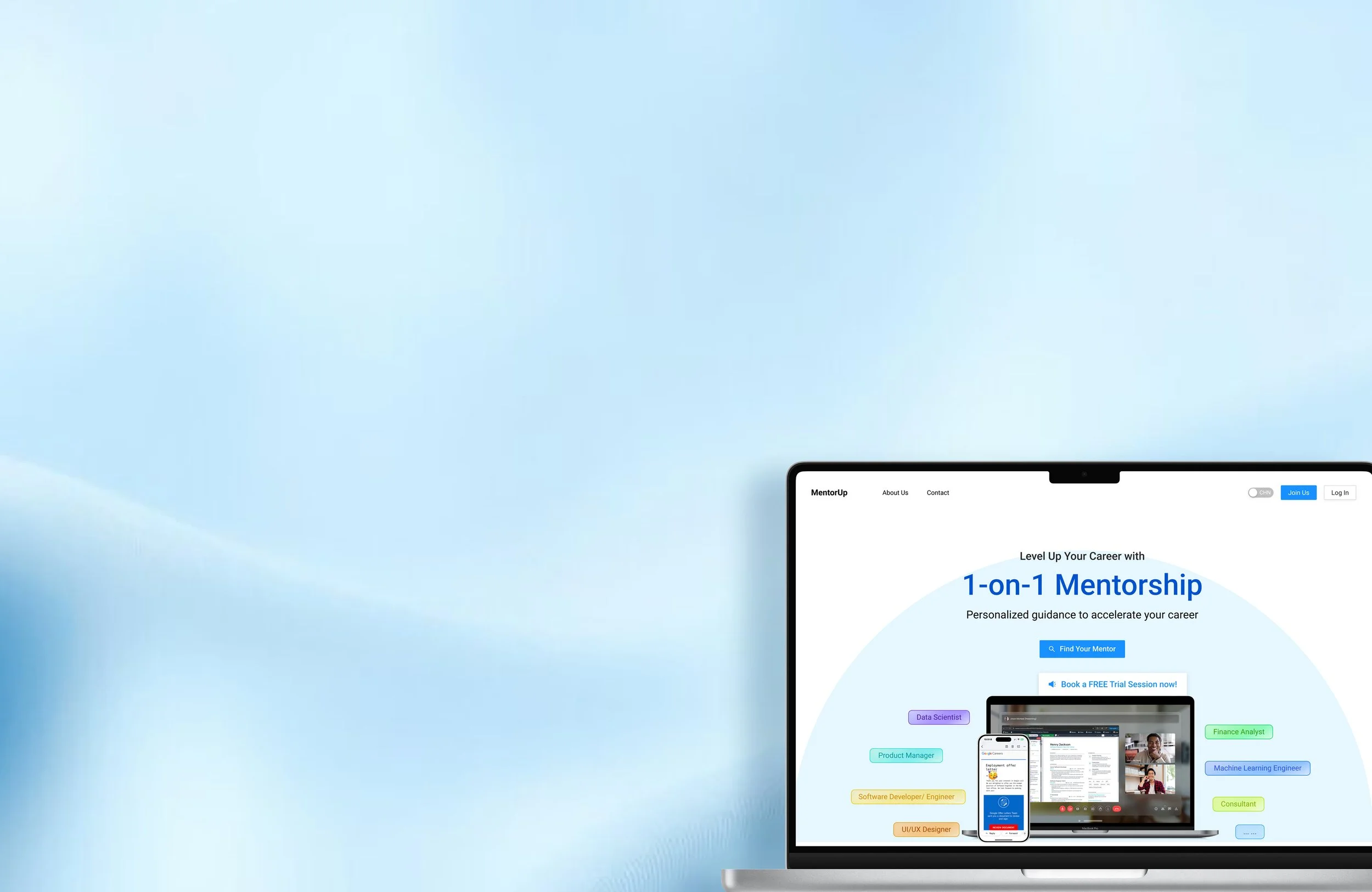
MentorUp
Product Design | UX
Role: Product Designer & Strategist
Focus:
Funnel Optimization, User Trust Architecture, MVP-to-Market Evolution
Key Results:
Streamlined booking flow from 120s to 30s;
Resolved critical registration drop-off via deferred intent logic.
Overview
We started from zero
MentorUp is a professional mentorship platform tailored for STEM graduates and people need career advice. We lauched MVP, and it worked: users could browse, select, and pay. But 'functional' wasn't enough to drive conversion.
The MVP was a hypothesis; the redesign was the validation.
Problem
Users could find the platform. They couldn't commit to it.
After launching the MVP, we conducted moderated walkthroughs with STEM professionals (Data Scientists, CS Grads). The data was clear: users liked the idea but didn't trust the platform enough to pay. We identified a 'Commitment Gap' asking for user data (Registration) and money (Payment) before we had established professional credibility.
High Drop-off: Users abandoned the booking flow due to a premature and friction-heavy registration process.
Trust Deficit: Visual inconsistency undermined professional trust.
We interviewed 10 users for what they care most
-
![]()
“A platform with professionalism and straightforward flow is something I would like to pay for.”
Luke, Product Manager with Business background
-
![]()
“I want to easily find a mentor has similar background as mine.”
Amy, Investment Banker wants to switch career
-
![]()
“I need guidance for this industry and interview. My school alumni would be my first mentor choice.”
Mike, C.S. undergrad looking for jobs
-
![]()
“Listening to people has similar background as mine helps.”
Ming, Data scientist from a non-target school




The MentorUp V2.0 Strategic Redesign
Based on research and interview to understand the hurt point from our potential users, we upgraded a new version.
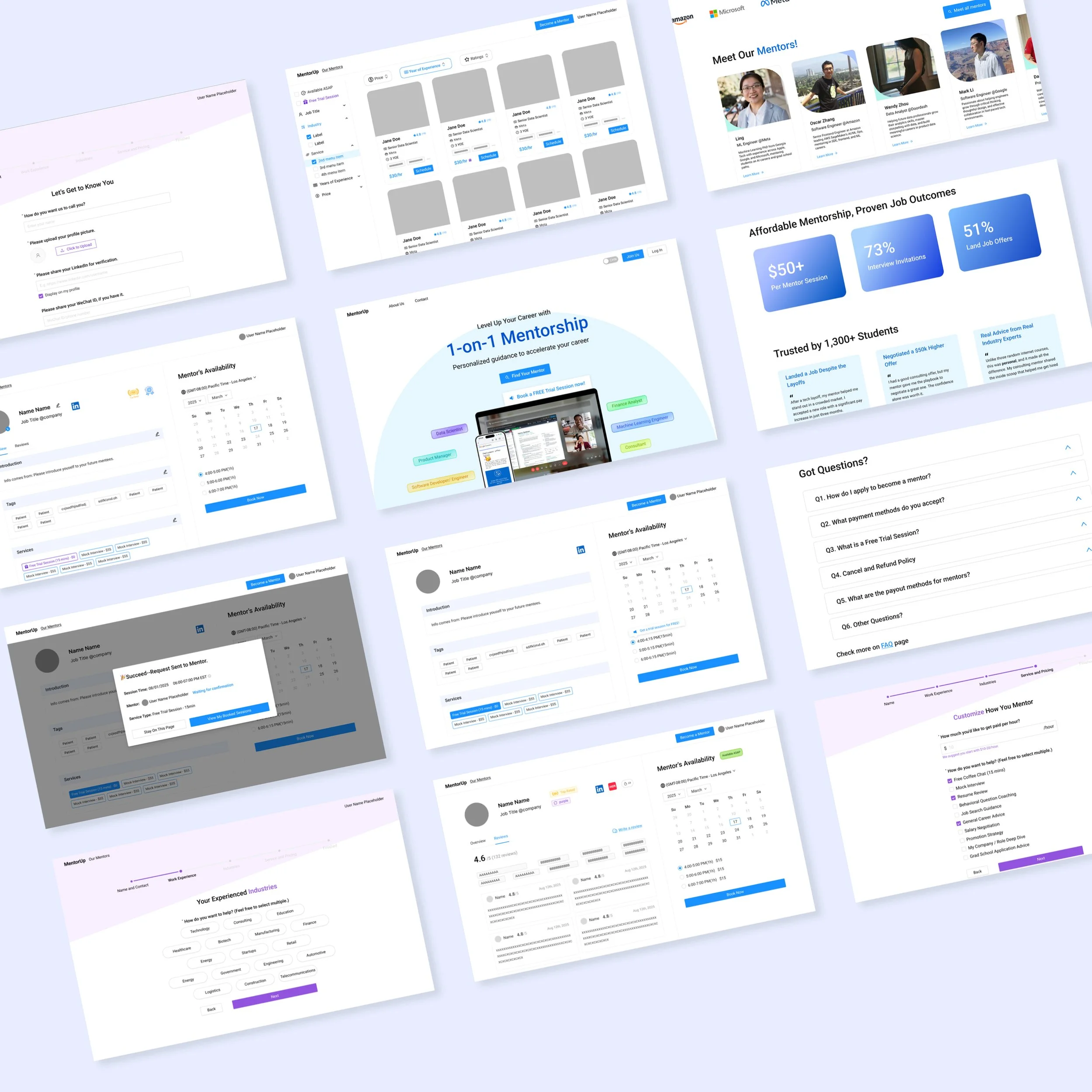
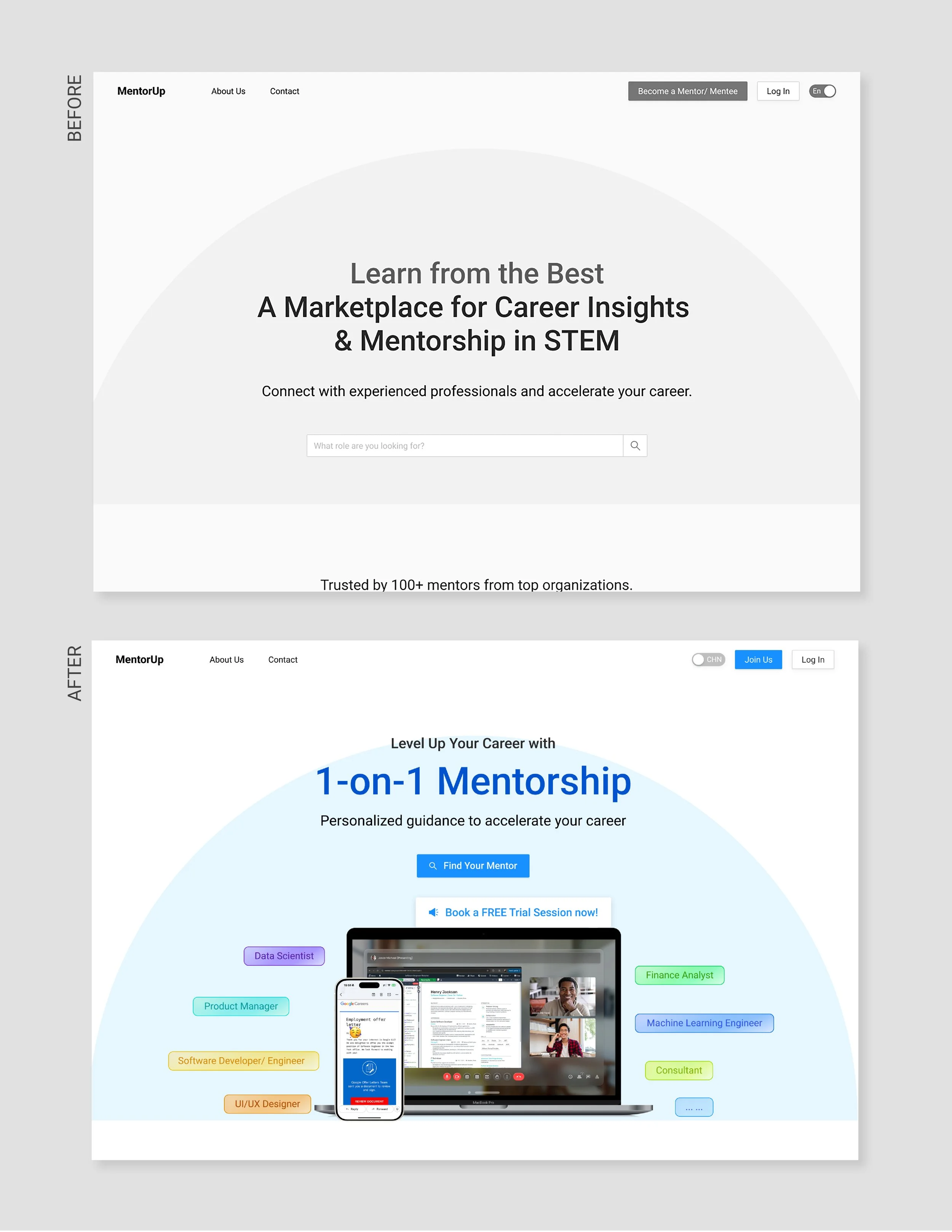
Landing Page:
From Features to Outcomes
The MVP homepage was platform-centric, cluttered with 5+ font sizes and dense copy. Research showed STEM users need immediate validation.
We re-engineered the Information Architecture (IA) to answer one question in 3 seconds: 'What is the ROI for my career?' We unified the visual system and promoted 'Success Metrics' to build immediate authority.
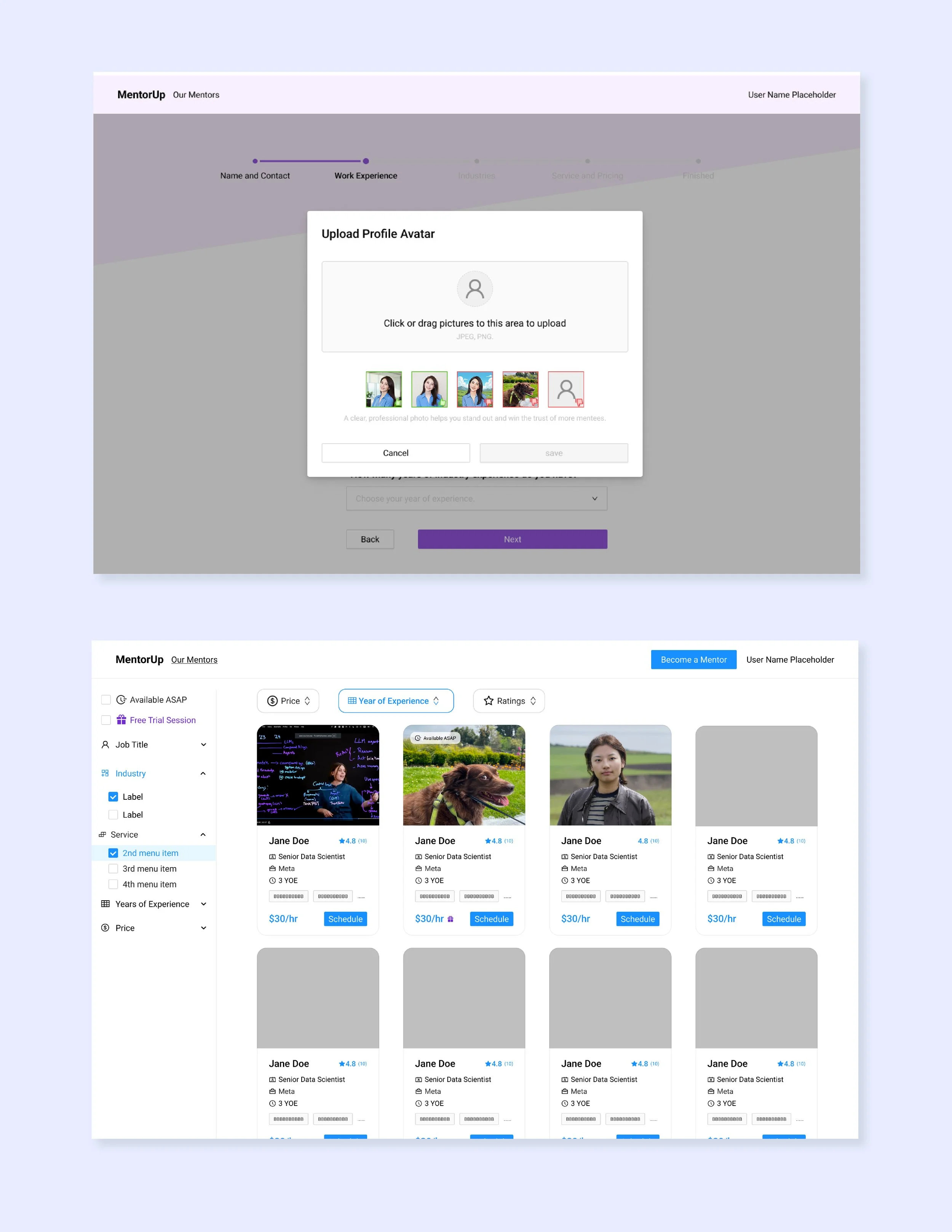
Mentor Discovery:
Scaling Professional Credibility
Trust is the primary currency in mentorship. Users flagged inconsistent mentor photos (AI avatars vs. casual pics) as a red flag.
Our redesign enforced Visual Standards and re-ordered the filtering logic based on user search behavior:
Job Title → Service → Company.
We stopped being a directory and started being a curated network.
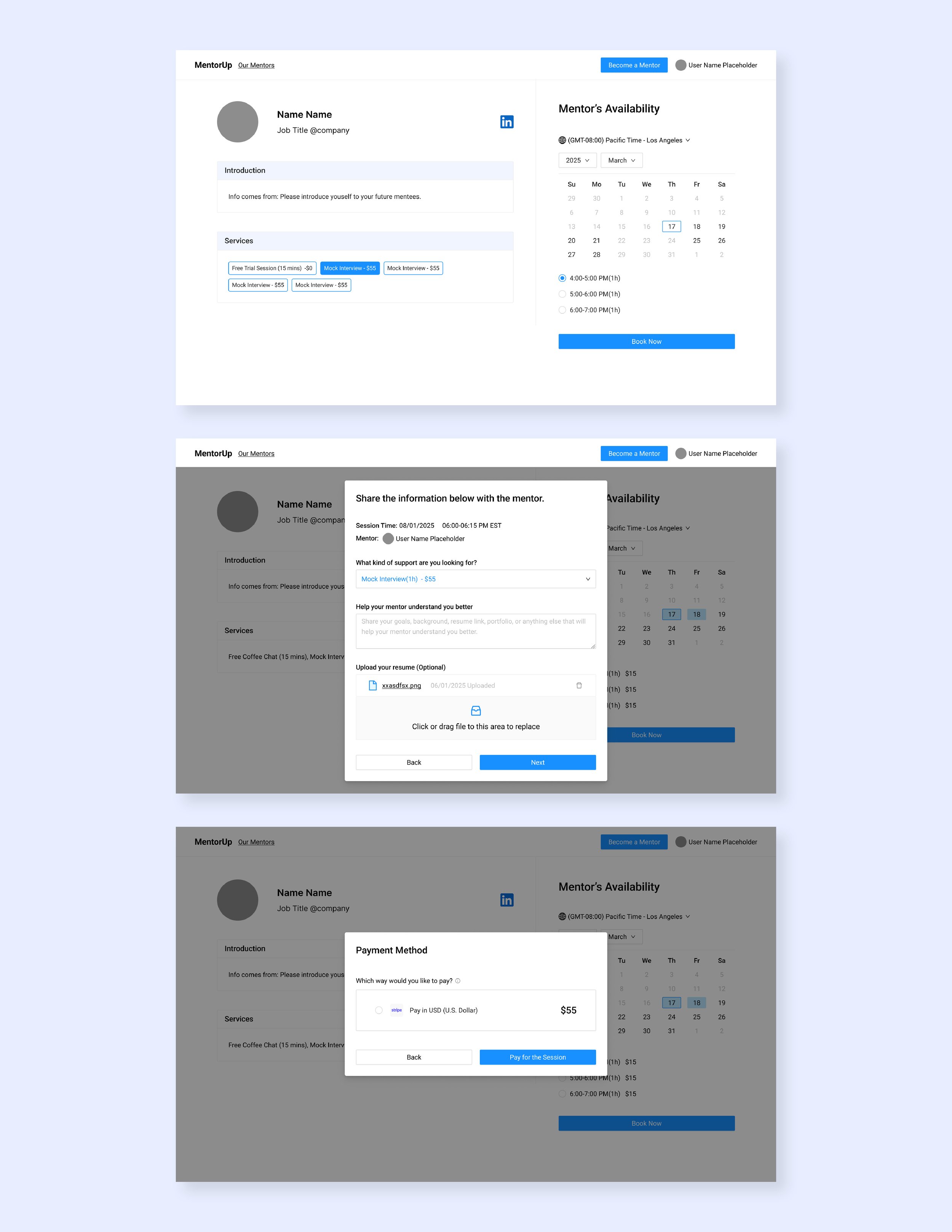
The Booking Flow:
Intent-Based Conversion
This was our most critical business pivot. In the MVP, we forced registration upfront. In V2.0, we implemented Deferred Registration: users now choose their mentor and time first. Our team also added a Confirmation Safety Net before the payment gateway. By moving registration and data-heavy tasks (like resume uploads) to after the payment, we reduced the pre-purchase cognitive load by 70%.
Impact &
Product Reflection
This project was an exercise in Product Prioritization. By focusing on the "Registration Timing" and "Confirmation Flow," we addressed the psychological barriers that prevent STEM professionals from committing to a mentor.
Key Achievement:
Streamlined the booking process from a 2-minute "registration-first" hurdle to a
30-second "intent-first" flow.
The redesign removed the 'Distrust Tax' on our users. If we were to ship V3, our focus would shift to Retention: building an AI-matching engine and a mentor-side dashboard. We moved the needle from 'It works' to 'I trust it.
Systems Thinking:
Iterating on MentorUp taught me that design isn't just about pixels; it's about Managing Friction. By deferring registration and standardizing trust signals, we didn't just 'fix the UI'—we optimized the business funnel.